01
Faster staff review
Dashboards open with triage already computed, so staff start with who needs attention instead of rebuilding context in spreadsheets.

Starke Force helps teams, clinics, and performance facilities turn ForceDecks, Dynamo, and Force Frame testing into triage, staff alignment, and coach-reviewed programming in one athlete record.
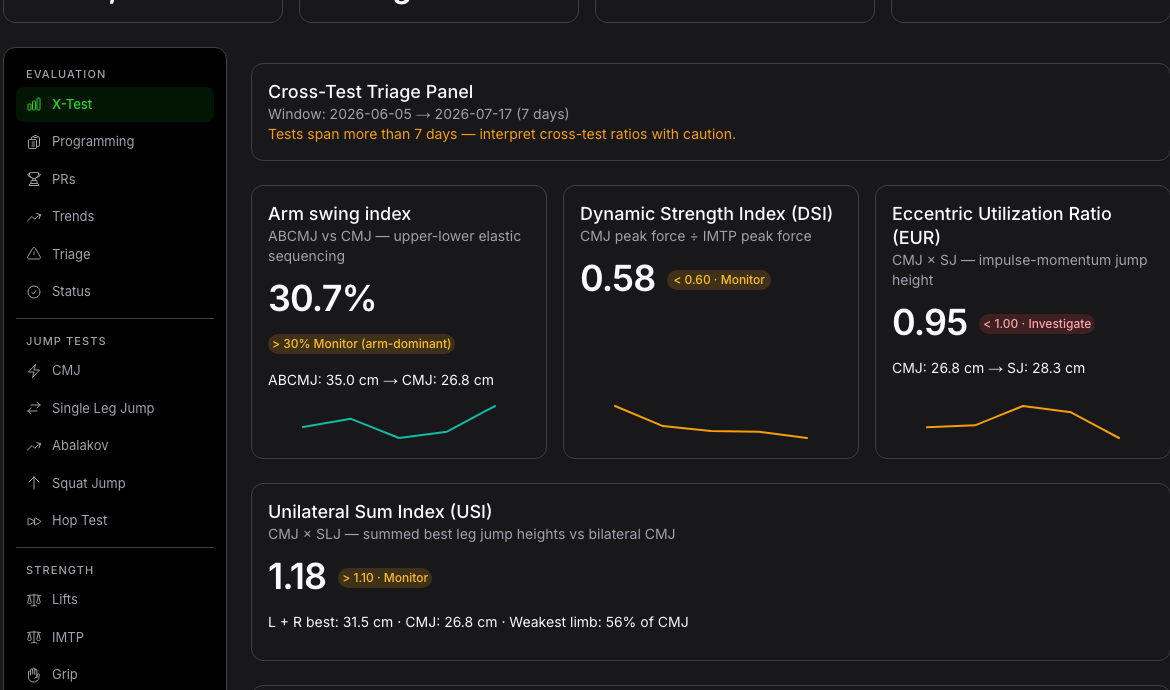
Most organizations already have device output, raw curves, and spreadsheets. The pain is turning that signal into a consistent morning workflow across coaches, sports science, and clinical staff. Starke Force closes that gap.
Dashboards open with triage already computed, so staff start with who needs attention instead of rebuilding context in spreadsheets.
Flags, tooltips, and playbooks give performance directors, coaches, and clinicians one shared language across teams and practitioners.
VALD tests, manual assessments, intake, PRs, plans, and coach-reviewed programming stay on the same athlete record.
Starke Force is strongest when your organization already owns VALD equipment, tests athletes regularly, and wants a more repeatable way to interpret results and act on them.
Best for performance directors, head strength coaches, and sports science leads managing multiple teams, practitioners, and testing workflows.
Useful when coaches need a cleaner way to connect force data, athlete communication, and ongoing program delivery without stitching together separate tools.
Strong fit for clinicians and performance staff who need asymmetry tracking, manual screens, and training follow-through to stay connected on one timeline.
Starke Force does not replace your testing hardware. It replaces the manual interpretation and handoff work around it.
Force curves, device metrics, and test history are already part of your workflow.
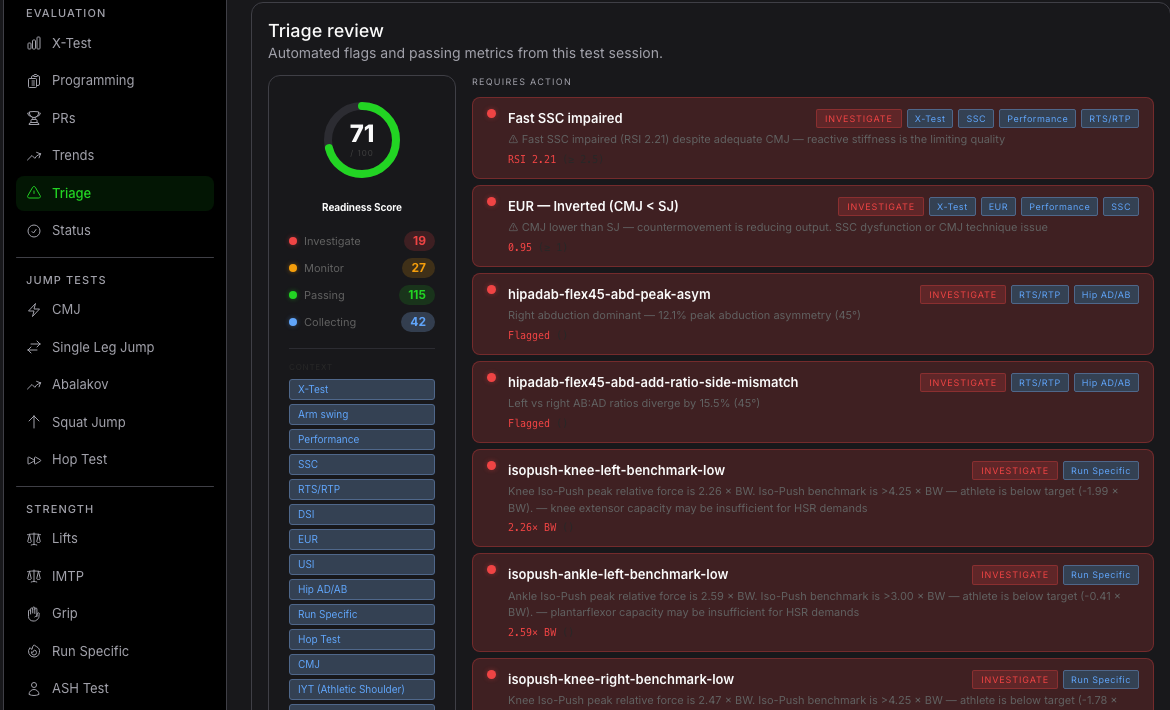
Cross-test triage, baseline deviation, severity-ranked flags, and role-specific explanations help staff know what matters first.
Programming, intake, manual assessments, PRs, and athlete communication stay attached to the same athlete record instead of living in separate docs.
Your roster is too large for manual curve review. Starke Force ranks severity across per-test flags and cross-test composites so staff know who needs a conversation.
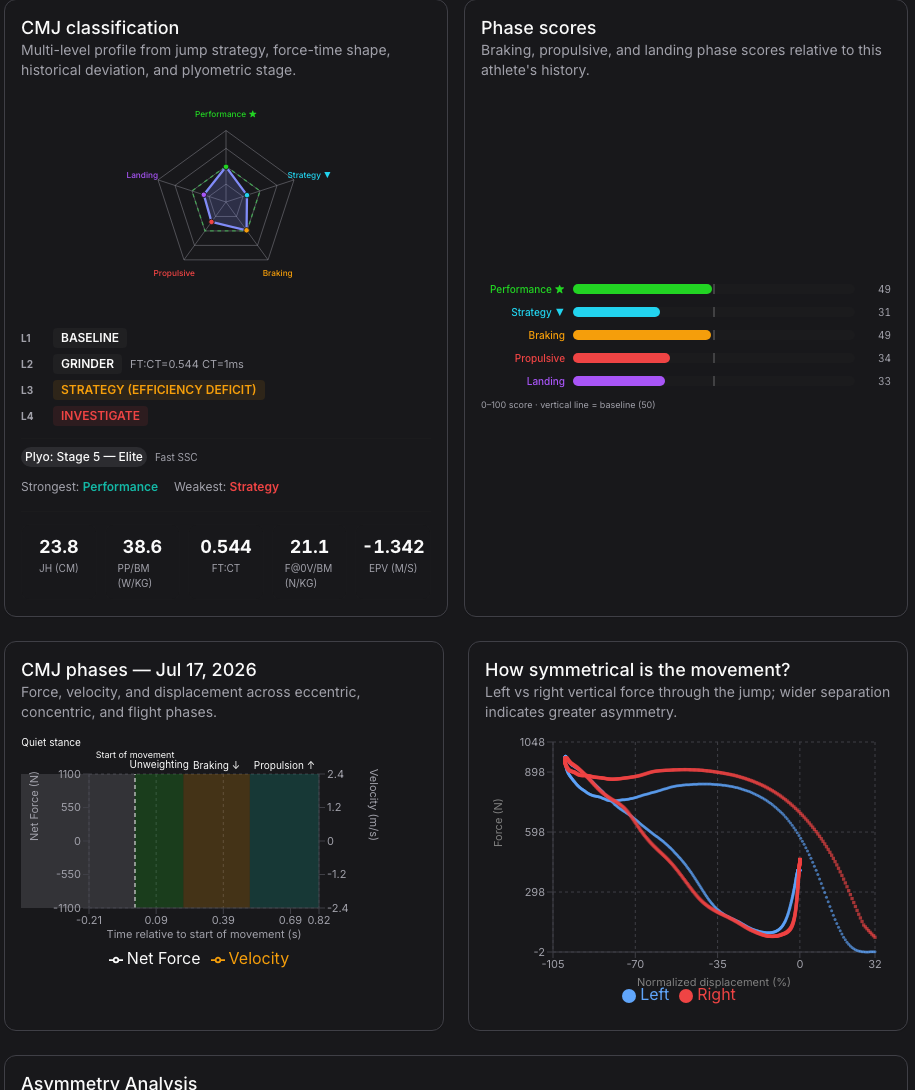
For countermovement jump sessions, Starke Force can surface force/work-loop style views, phase scores, and force-time shape so staff can see more than a single output number when recordings are available.
Programming is not static. Starke Force uses the latest fired triage and overview signals, then adjusts recommendations using athlete intake, soreness, pain constraints, and coach input. This is not open-ended workout chat.
AI-generated training suggestions are not medical advice. Coaches and clinicians remain responsible for all training and return-to-play decisions.
Fresh triage flags, cross-test changes, and current readiness signals update the recommendation.
Soreness, pain modifiers, injury-related avoidances, and equipment constraints shape what is safe and useful that day.
Structured session JSON, allowlist-only movements, and validator checks before anything gets published to the athlete.
Turn existing VALD investment into a consistent operating system across teams.
Open the day with readiness, triage, and programming support already connected.
Use documented rules, cross-test profiling, raw trial retention, and reprocessing.
Track asymmetry, manual screens, baseline deviation, and return-to-play context.
See readable explanations, personal records, daily check-ins, and leaderboards.
Edit flag labels, tooltips, playbooks, prompts, and allowlists without a code deploy.
Starke Force connects to the VALD ecosystem your organization already uses. Select the equipment each facility owns, keep raw trials, and let analysis run before staff open the dashboard.
Starke Force does not ask staff to trust a mystery model. Analysis rules are documented, thresholds cite published practice where applicable, and raw data can be reprocessed as methodology evolves.
Read the methodologyEarly evaluations can start with one organization, one team or subgroup, and one or two staff leads. The goal is to prove whether Starke Force improves the workflow between testing, triage, and programming in your real environment.
| Manual workflow | Starke Force |
|---|---|
| Calculate DSI, EUR, and readiness in spreadsheets. | Automated Athlete Overview with cross-test flags. |
| Each coach interprets thresholds differently. | Org-wide rules, labels, tooltips, and playbooks. |
| Programming docs separate from testing data. | Flag-driven programming on the same athlete record. |
| Athletes hear “numbers are off” with little context. | Plain-language athlete explanations and PR context. |
Request a pilot walkthrough to review triage, staff workflow, and how your organization could evaluate fit without changing how you test.